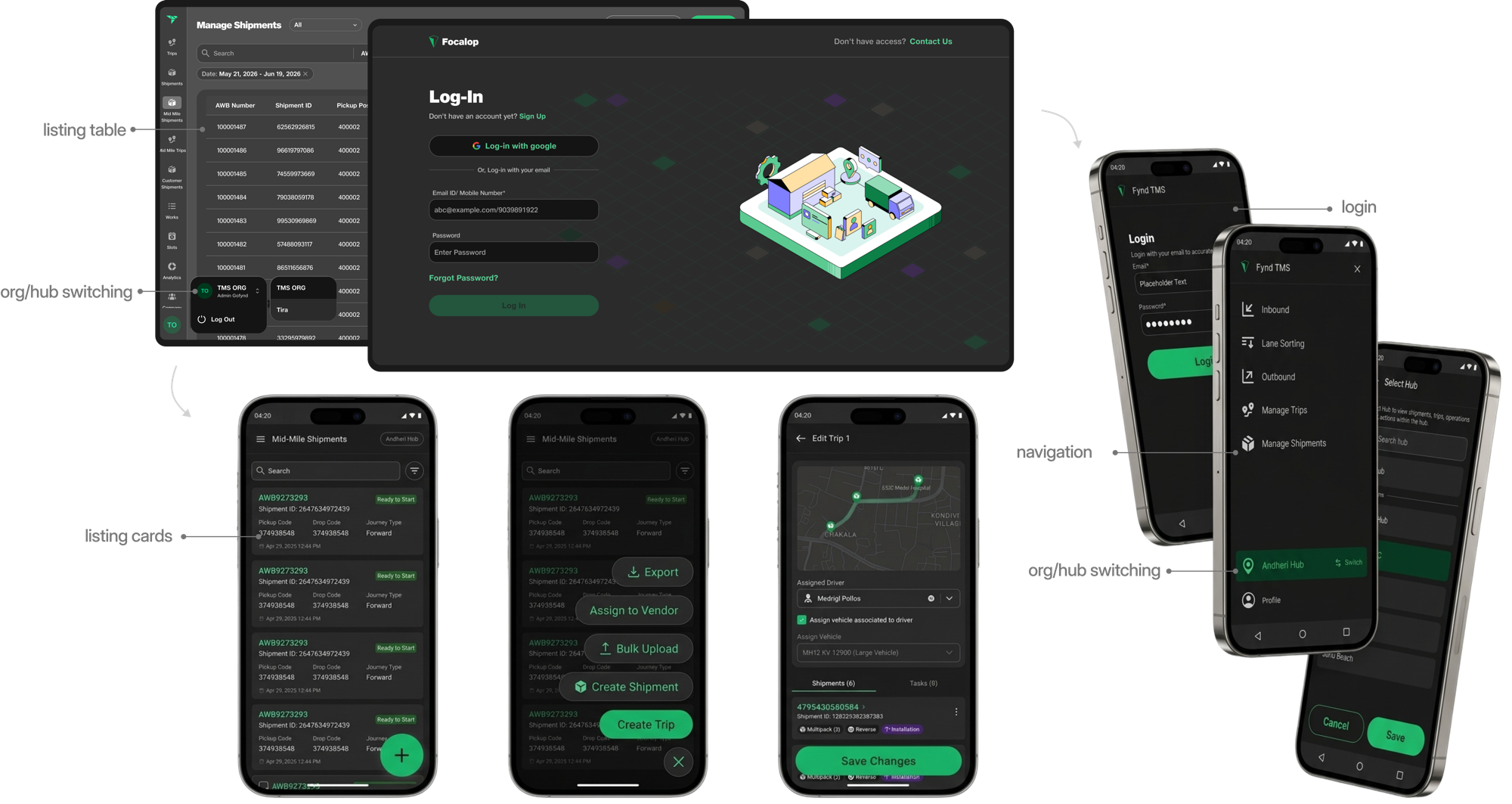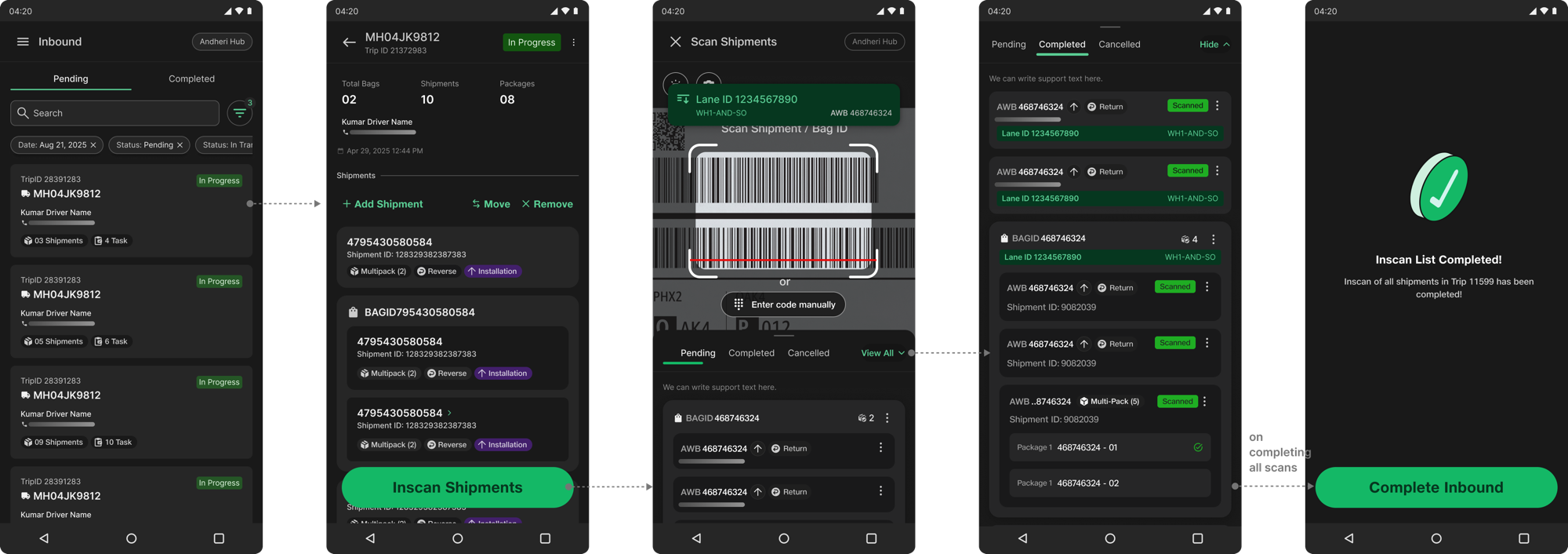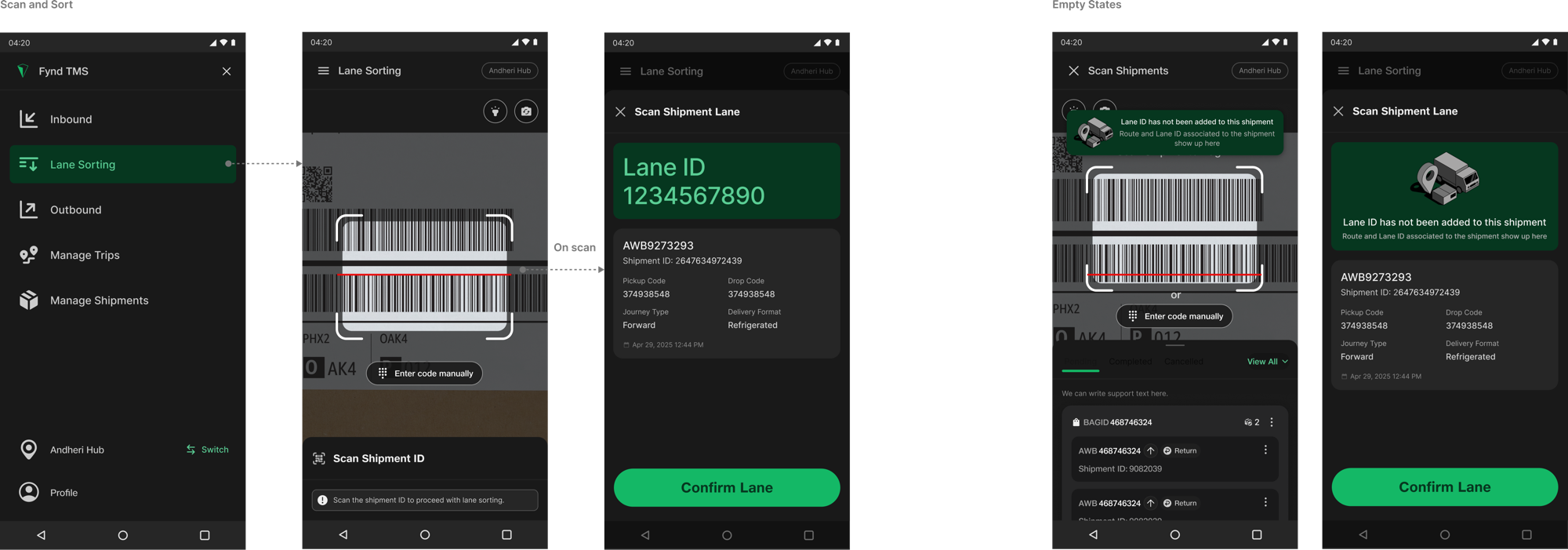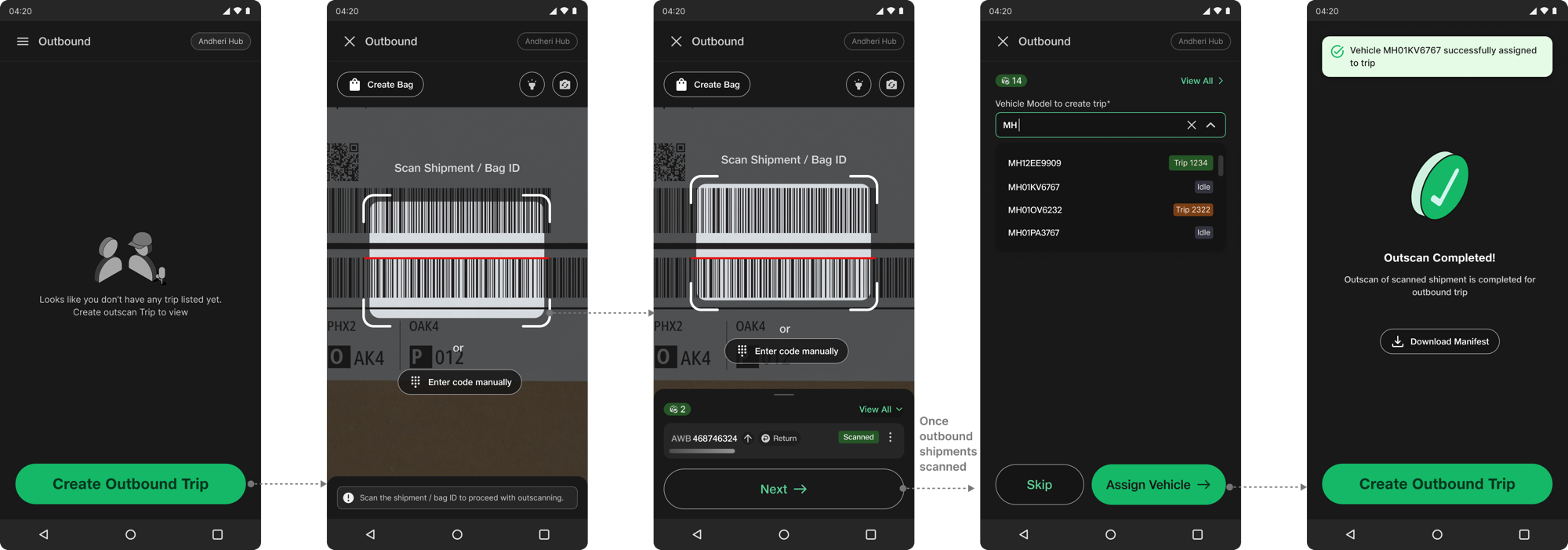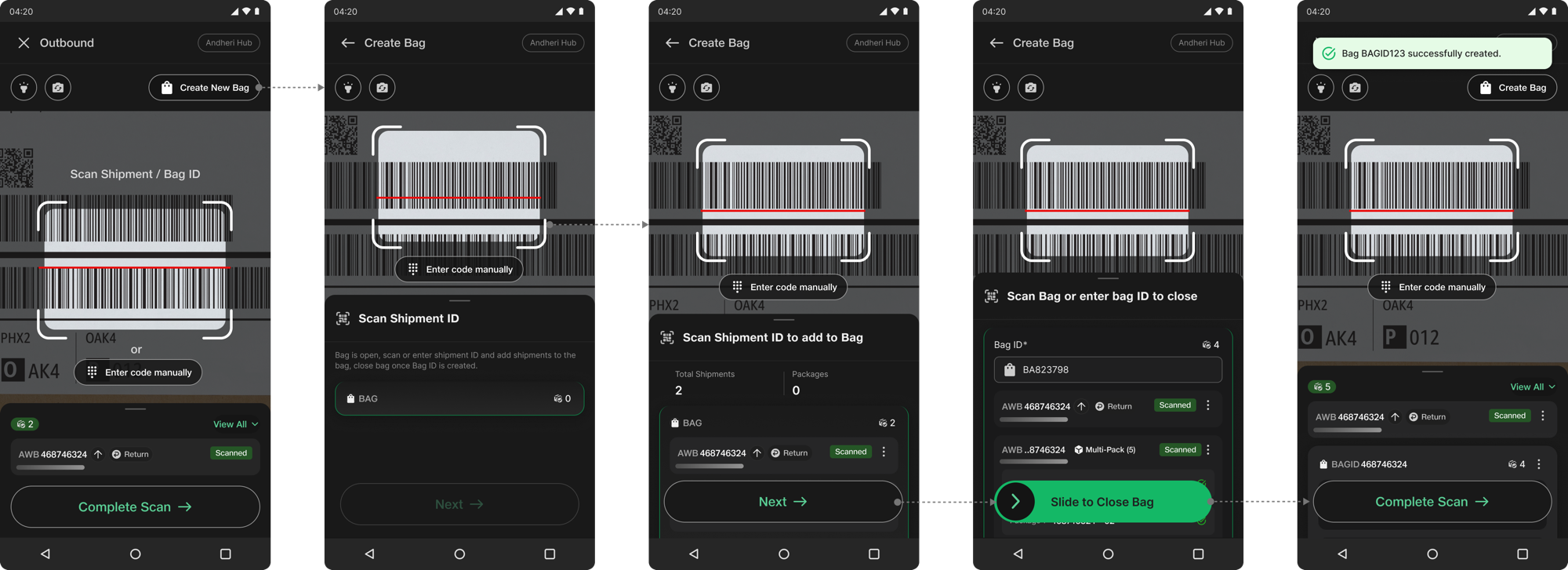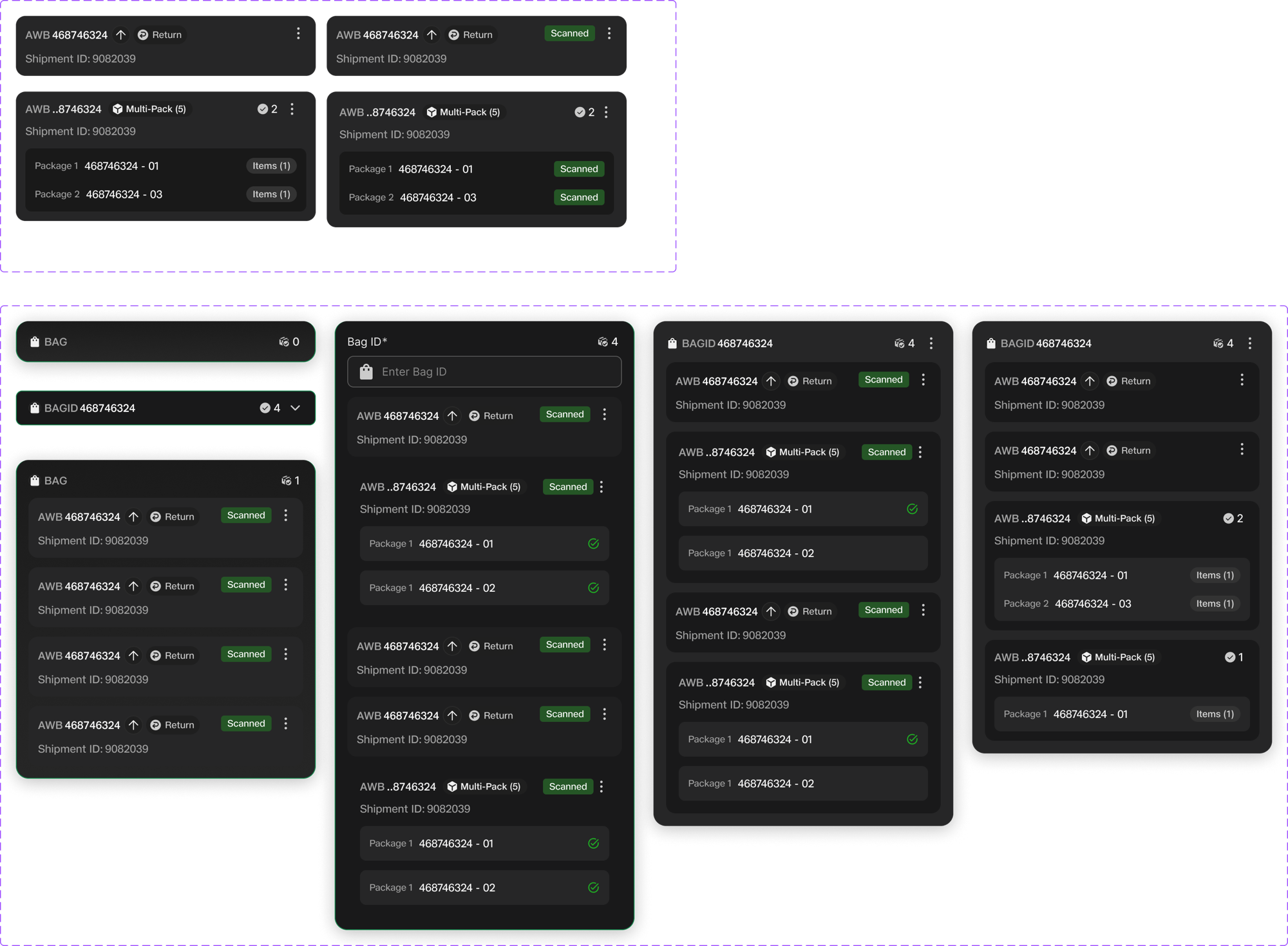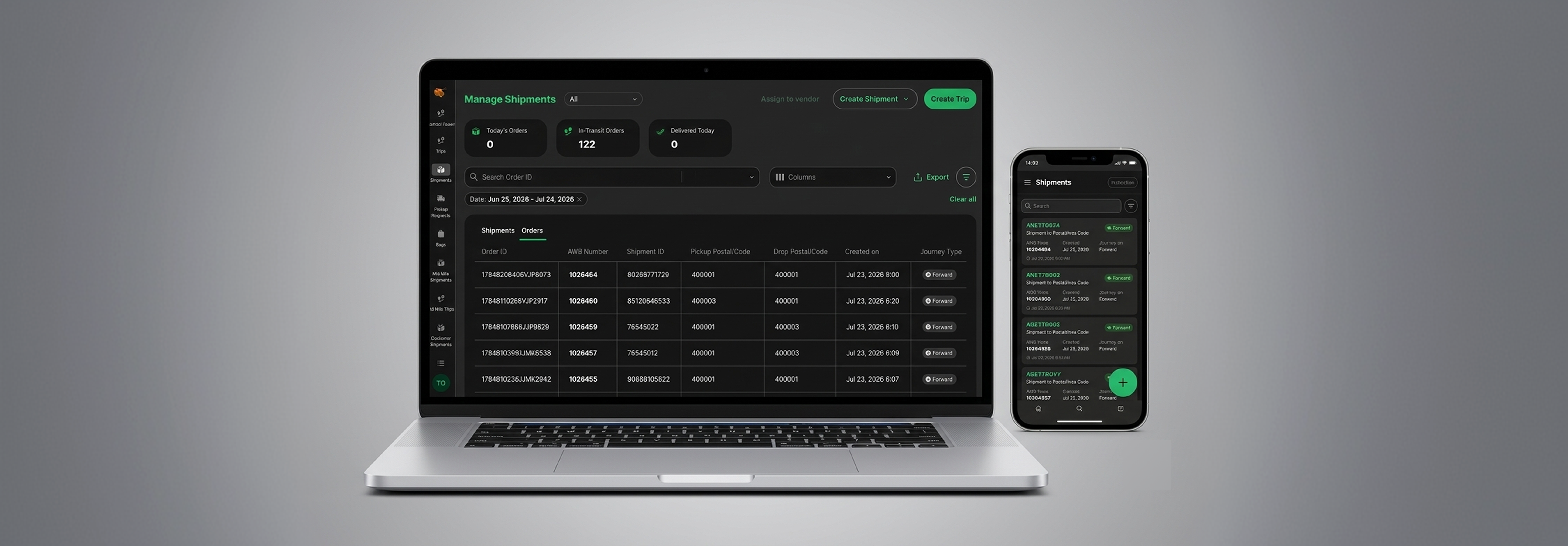
Fynd TMS was designed for desktop, ops managers at workstations with full screens, stable connectivity, and time to think. The mid-mile operation was the opposite: hub staff worked on shared tablets and personal phones in loading bays, under time pressure, with poor lighting and gloved hands. The desktop interface wasn't just inconvenient, it was functionally unusable on mobile.
Three enterprise clients were ready to onboard, but their hub operations depended on field-usable tooling. We had the logistics engine. What was missing was the interface layer that could survive the physical reality of a warehouse floor.
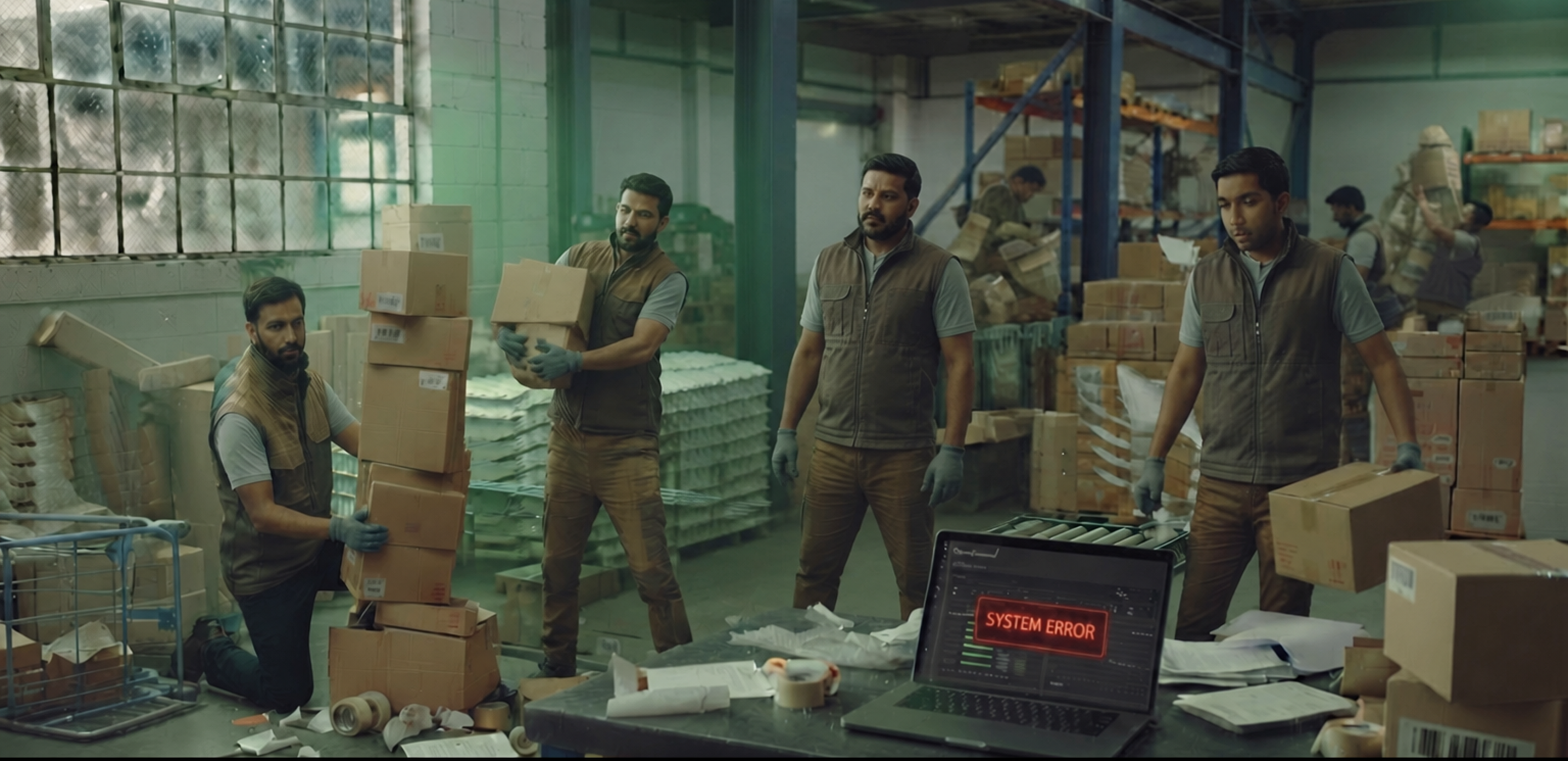
Hub workers operate in 3–5 second interaction windows. Every scan, tap, and confirmation has to complete without a full hand-free. The design had to account for glove-mode interactions, variable lighting, and a shared-device model where sessions don't persist.
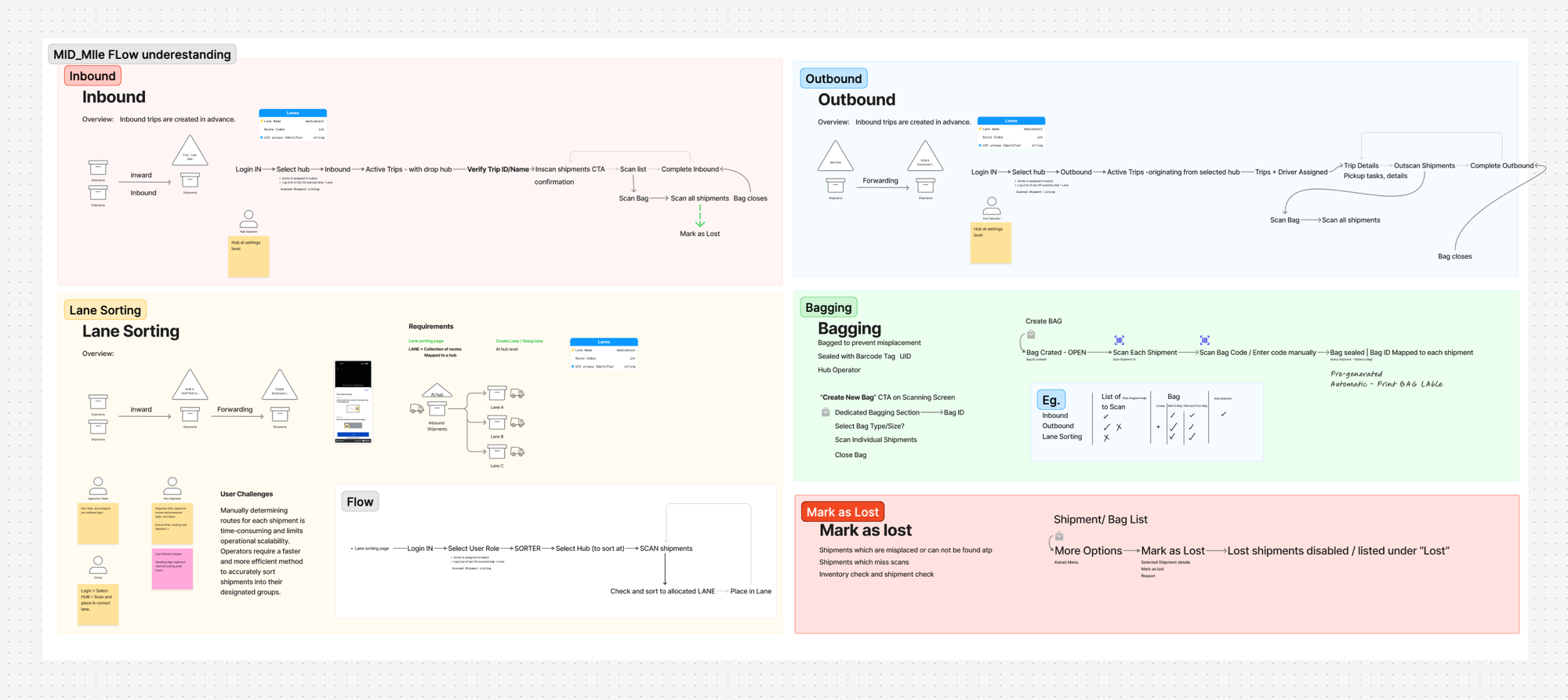
Mind Mapping
Before opening any design tool, I mapped every mid-mile flow on a whiteboard — inbound, lane sorting, outbound, bagging, and mark-as-lost. The goal was to understand the full decision tree each hub worker navigates: what triggers each step, where errors can occur, and which actions need to be immediate versus deliberate. Getting the logic right on paper first meant the screen design could focus entirely on clarity and speed.