
The friction
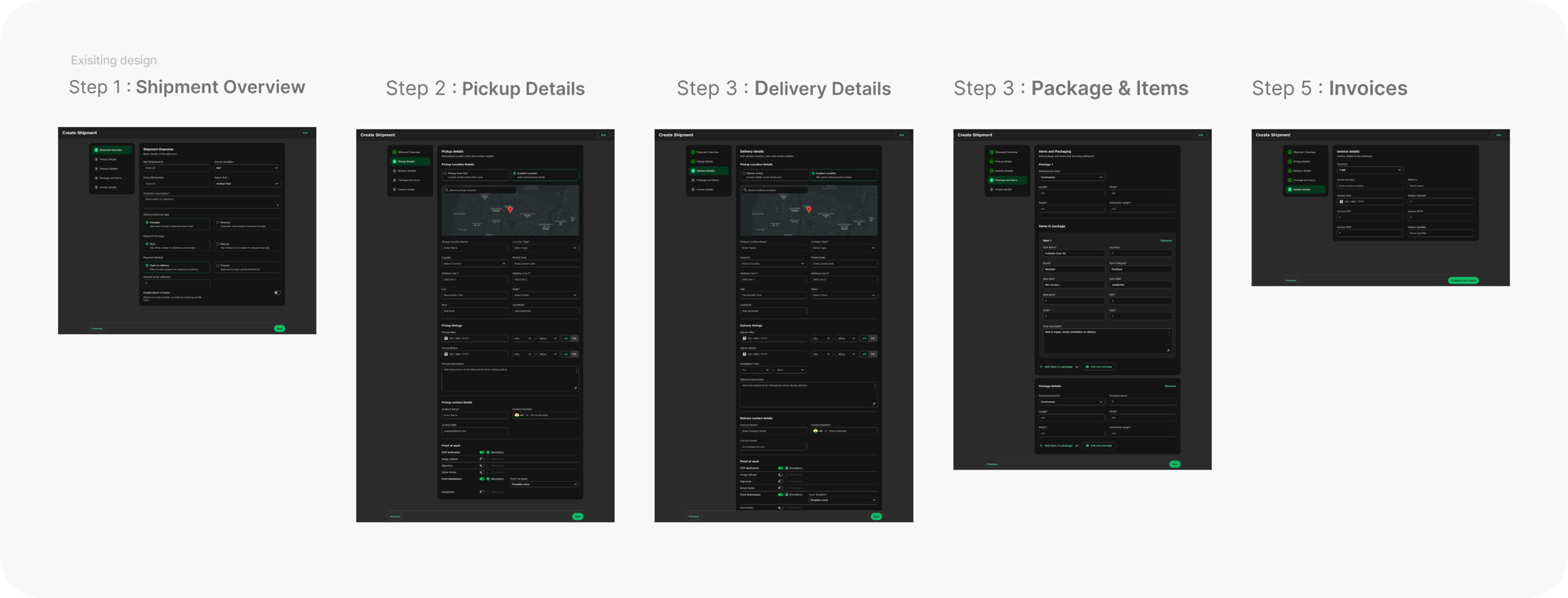
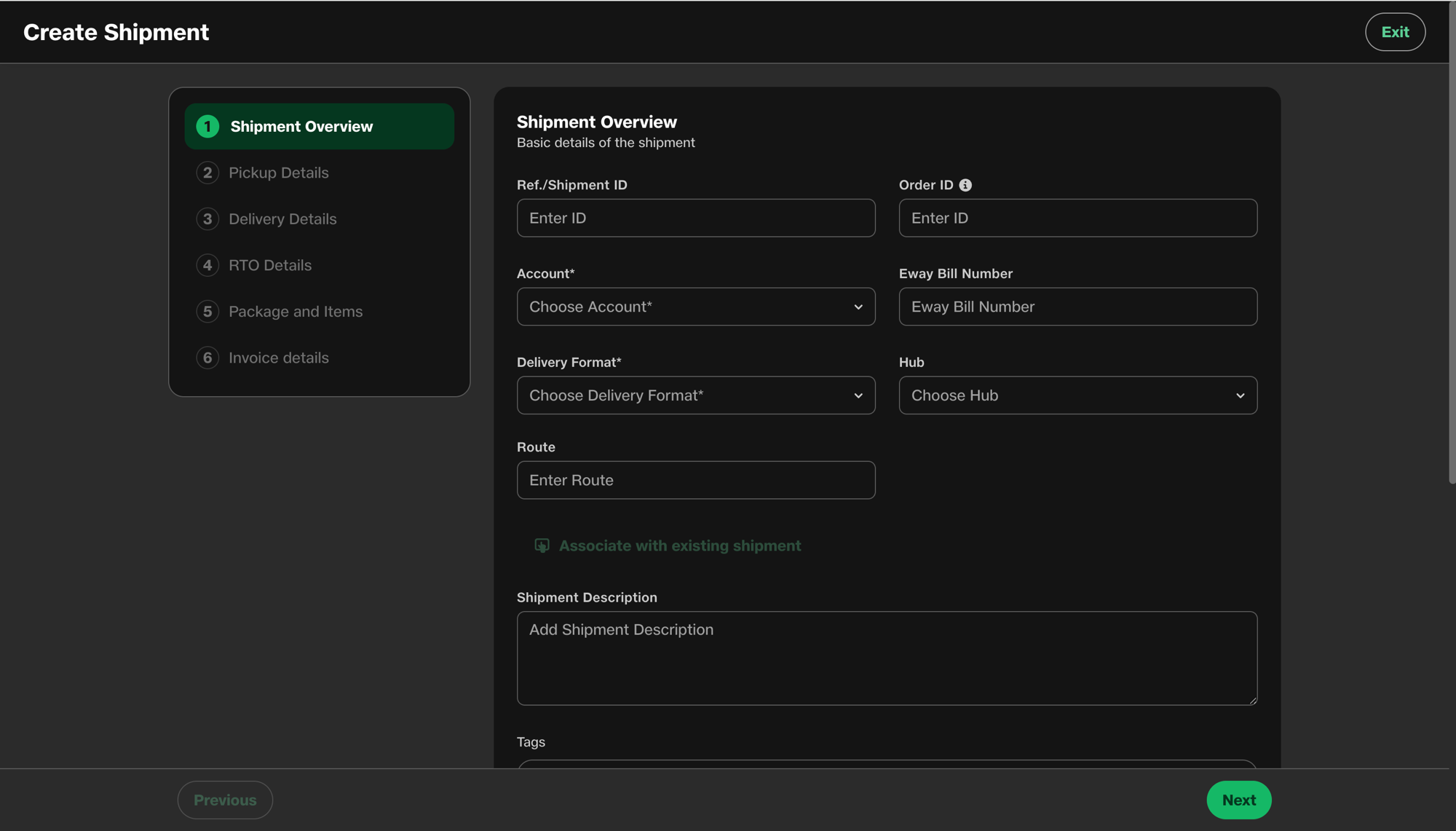
The shipment creation form was a 5-step wizard with roughly 40 fields spread across pages. Ops managers under time pressure bypassed it entirely, entering shipments manually downstream or creating duplicates. The form wasn't failing because users didn't understand it. It was failing because its structure didn't match how shipment data actually becomes available across a shift.
40% of inbound support tickets were form-related. The errors weren't random, they were systematic, pointing to specific structural issues: forced sequencing, no progress persistence, and zero inline feedback.
5 steps.
3 hand-offs.
1 reason tickets piled up.
Ops managers consistently skipped step 3, not because they didn't know the data, but because that step demanded information that wasn't available until later in the intake process.
What's Improved
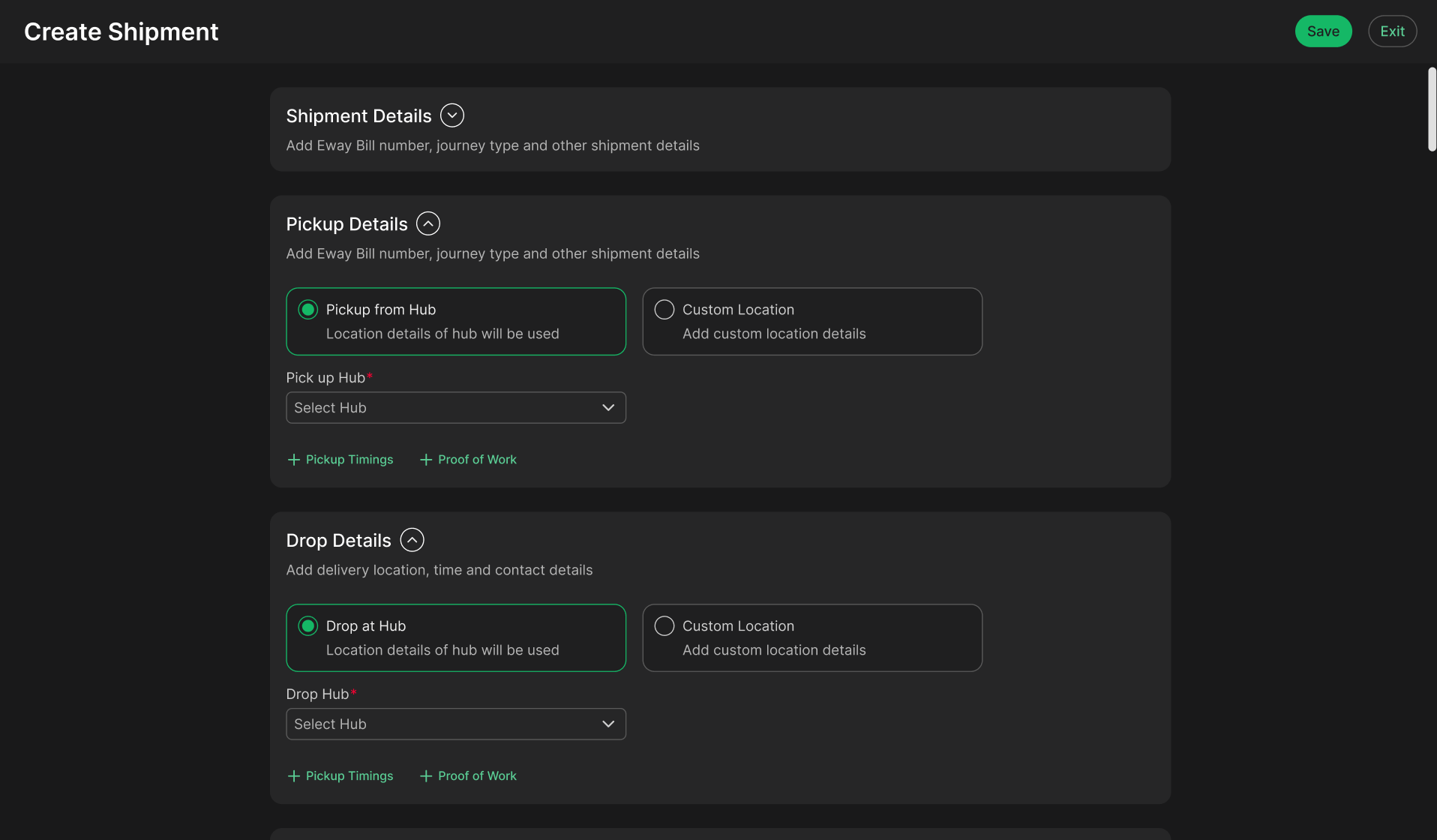
Unified Layout, no steps.
A single scrollable form mirrors how ops teams actually think, scanning ahead, filling what's available, returning to gaps.
42 → 3 Inputs
The original 5-step wizard spread 42 fields across disconnected pages. The new form consolidates into three contextual sections, keeping only what's needed at intake.
Progressive Disclosure
Showing all 40 fields at once creates decision fatigue. Collapsible sections reveal fields only when contextually needed, reducing perceived complexity without removing optionality.
Inline Validation
Errors at the end of a 5-step flow require users to trace back across multiple pages. Field-level validation surfaces issues immediately, where the user's attention already is.
What did the Shipment Creation Form look like
Interview and Contextual Observations
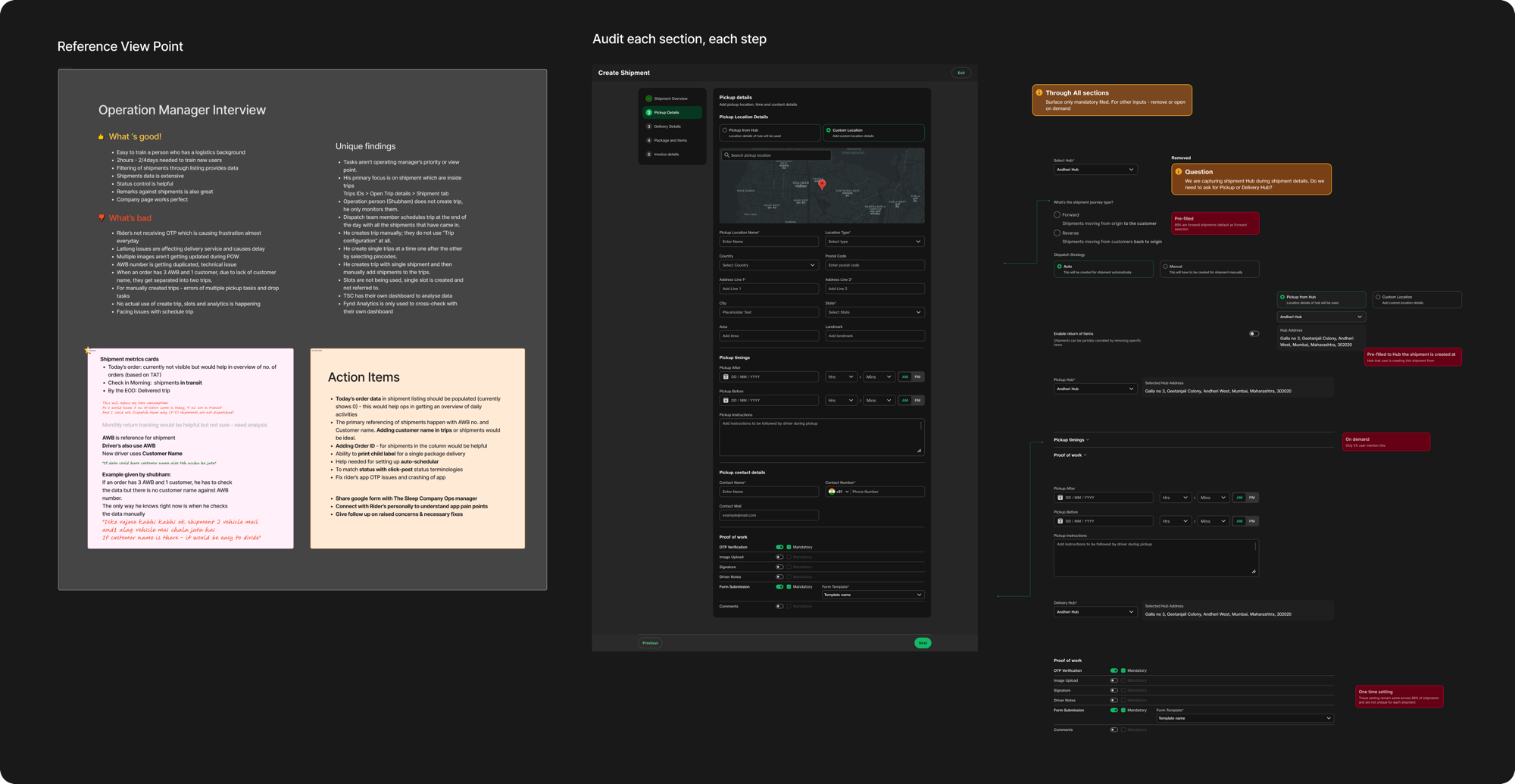
Every field in the original form was audited against real session data from ops manager interviews and contextual observation sessions. Non-mandatory inputs were removed entirely. Anything the system already knew, including hub location, dispatch strategy, and journey type, was pre-filled from existing data and patterns. What remained was a minimal set of inputs genuinely required at intake: only the fields a dispatcher actually needs to act on a shipment.
Key Decisions
Remove all non-mandatory inputs from all steps
Auto-fill fields, e.g. pickup hub defaults to the hub the shipment is being created from
Retain choices from past patterns
Move parent-level settings that rarely change to Admin-level configuration
Progressive disclosure, surface advanced fields on demand only